Some criticisms of GDP as a measure of economic output are: It does not account for the underground economy: GDP relies on official data, so it does not take into account the extent of the underground economy, which can be significant in some nations. This can overstate a country’s actual economic output.
How do they collect GDP data?
Data are gathered from many small surveys. America’s Bureau of Economic Analysis draws data from surveys of manufacturers, builders and retailers, as well as from trade and financial flows, among other sources. These data are used to estimate the components of GDP, such as total investment and net exports.
What are the difficulties in measuring GDP?
GDP is a useful indicator of a nation’s economic performance, and it is the most commonly used measure of well-being. However, it has some important limitations, including: The exclusion of non-market transactions. The failure to account for or represent the degree of income inequality in society.
Does GDP capture all data?
GDP measures the total market value of all final goods and services produced in an economy in a given year. Goods are items that are touchable, such as shoes, staplers, and computers. Services are actions, such as haircuts, doctor exams, and car repairs. GDP is meant to capture the total value of all this production.
Does a rising GDP benefit everyone?
Answer:When a country’s GDP is high it means that the country is increasing the amount of production that is taking place in the economy and the citizens have a higher income and hence are spending more. However, increase in GDP does not necessarily increase the prosperity of each and every income class of the nation.
What can replace GDP?
The HDI is a prime alternative to the GDP system, factoring in life expectancy, education length and quality, and standards of living. Another alternative is the GPI system, which factors in ecology to measure a country’s total value.
How often does the GDP data come out?
GDP data is published as part of a broader set of statistical data, usually called the “national accounts.” These are usually produced on a quarterly basis (that is, every three months) – although in some cases more specific industry-level data is produced monthly.
Why is GDP so difficult to figure out?
When more actual numbers begin to trickle in, the aggregate result is changed, as was the case with the BEA’s assessment of second-quarter growth in America. Second, statistics offices habitually review how they compile GDP statistics, to reflect the new sources or concepts.
Who is responsible for the collecting data for GDP in India?
In India, the mammoth task of measuring the GDP is undertaken by a central government ministry. This ministry, with the help of various government departments of all the Indian States and Union Territories, collects information relating to the total volume of goods and services and their prices, and then estimates the GDP. Rate! Rate!
How is GDP measured in the real world?
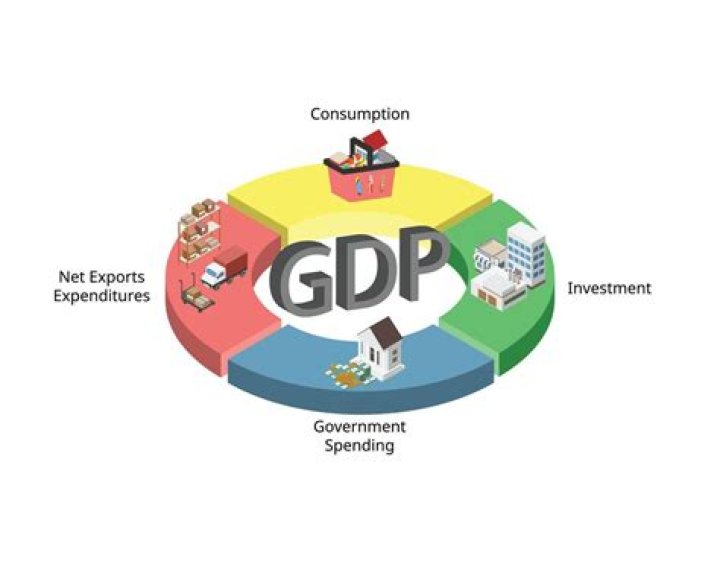
By Expenditure(the different ways that our output is “bought”): GDP = consumption + investment + government production + net exports GDP = C + I + G + (X – M) GDP Statistics in the Real World The real-world economy is more complicated than the one described in Economics for Everyone– even the more complete “circle” described in Chapter 23.