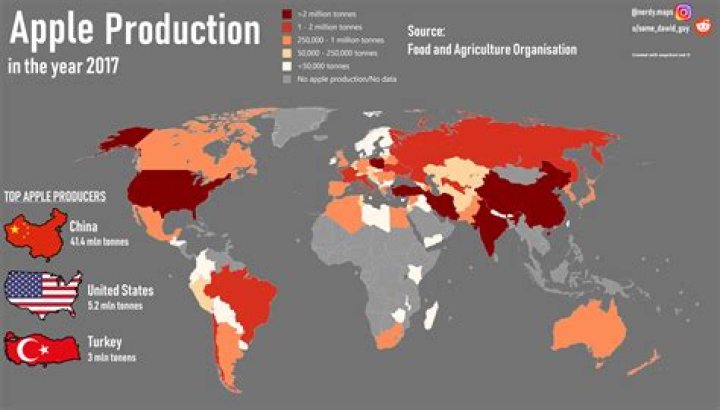
China
The company’s main manufacturing plant is in China, and, in addition to its headquarters in Taipei, it has offices across South Korea, the UK, the United States, and China.
How did Apple become so successful?
Apple went public in 1980, but Jobs eventually left—only to triumphantly return several years later. Apple’s success lies in a strategic vision that transcended simple desktop computing to include mobile devices and wearables. Both performance and design are key drivers of the Apple brand and its ongoing success.
What company sells technology to Apple?
United States. Despite its reliance on an international supply chain, Apple is also still very dependent on many companies in the U.S., including 3M (MMM), Broadcom (AVGO), Qualcomm (QCOM), Intel (INTC), Jabil (JBL), On (ON), Micron (MU), and Texas Instruments (TXN).
What was the first ever Apple product?
Apple 1
Apple 1: The first product in the history of Apple Computer turns 45. The first Apple product was launched on April 11, 1976, 45 years ago. It was just a motherboard, with about 60 chips, fully assembled. Thus was born the Apple Computer, later called Apple Computer 1.
Who are the largest tech companies in the world?
The World’s Largest Tech Companies: Apple Beats Samsung, Microsoft, Google. Investing. Charting the world’s largest companies and wealthiest people.
How much revenue does Apple make a year?
Another big earner for Apple, earning them about 37 billion dollars in revenue or 14% of the total, is the services that they provide including Apple TV, Apple Music and Apple TV. Over 40% of their revenue comes from North America.
Which is the most common industry in the world?
Industries: The tech sector was the most common in the rankings with 20 companies, followed by 14 in financial services, 11 in auto, and 8 in retail.
How does Amazon make more money than Apple?
Amazon earns a lot less profit than Apple as well. While their total revenue is comparable, only about 10 billion of it was net income. Over half of this revenue came from the sale of products via Amazon.com, with third party services accounting for 18 percent and various other services providing the rest.