34 Cards in this Set
| tactical plan | plan that translates general goals developed by strategic managers into more specific objectives and activities |
|---|---|
| Strategic | The process of determining the major goals of the organization and the policies and strategies for obtaining and using resources to achieve those goals |
What is a plan that translates general goals developed by strategic managers into more specific objectives and activities?
Business ch 6-10
| Question | Answer |
|---|---|
| Tactical Plan | Plan that translates general goals developed by strategic managers into more specific objectives and activities. |
| Contingency Plan | Plan that establishes alternate courses of action if existing plans are disrupted or become ineffective. |
What is the goal of an organization?
They include specific, day-to-day operational tasks needed to run a business and that help drive scalability and business growth. Key organizational goals can also include employee and management performance, productivity, profitability, innovation, market share and social responsibility goals.
What are the strategic goals of an organization?
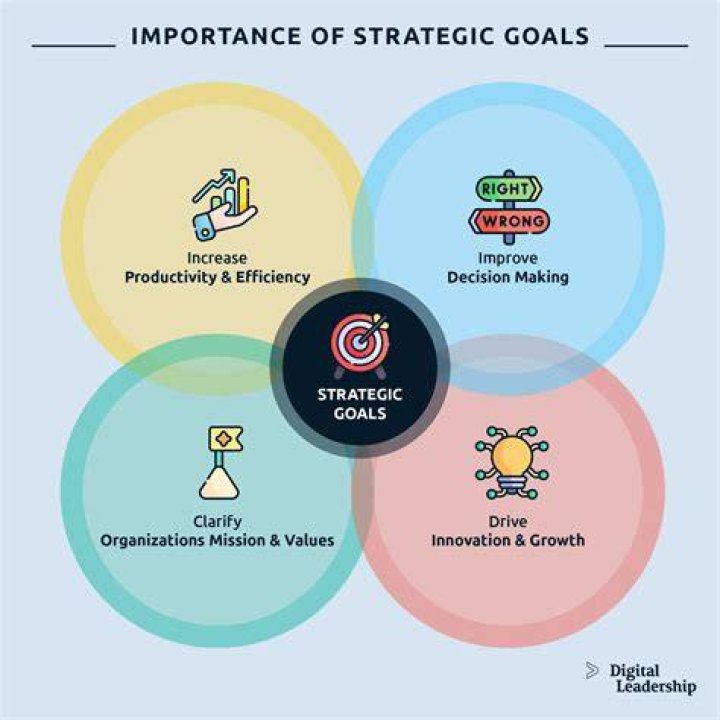
Strategic goals are the specific financial and non-financial objectives and results a company aims to achieve over a specific period of time, usually the next three to five years.
What are the two types of goals in business?
Types of business goals
- Time-based goals. Long-term goals.
- Performance-based goals. Performance-based goals are short-term objectives set for specific duties or tasks.
- Quantitative vs. qualitative goals.
- Outcome- vs. process-oriented goals.
Is the process of determining the major goals of the organization?
The planning process is concerned with defining a company’s goals and determining the resources necessary to achieve those goals. Achieving a vision requires coordinated efforts that adhere to a broader organizational plan.
Who performs tactical planning in an organization?
Lower-level managers have a better understanding of the day-to-day operations, and they are usually the ones responsible for tactical planning. Second, strategic planning is concerned with the future, and tactical planning with today.
Who should be involved in strategic planning?
Strategic planning starts at the top. The strategic planning process should involve the senior managers of an organization, and any key employees, who can actively contribute to the long-term planning of the organization.
What are the goals of the organization?
What is a tactical plan example?
A tactical plan answers “how do we achieve our strategic plan?” It outlines actions to achieve short-term goals, generally within a year or less. As an example, an HR strategic plan may include the following two strategic goals over the next five years with related tactical plans that include detailed actions.
How does who support the development of national health policies?
WHO has a long track record of supporting Member States in to develop National Health Policies, Strategies and Plans through country-level technical cooperation, facilitation of national policy dialogue and inter-country exchange, as well as through normative work and high level international policy frameworks.
Who is the Secretary General of the global strategy?
Following the launch of the Global Strategy, the Secretary-General established a High-level Steering Group for Every Woman Every Child to help provide leadership and inspire ambitious action for women’s, children’s and adolescents’ health.
What was the purpose of the global strategy?
It is also intended as a guide to enable people and communities to drive change, claim their rights and hold leaders to account. The Global Strategy was developed through an extensive consultation process involving governments, civil society, the private sector, UN agencies, and other constituencies.
How was the global strategy for Health developed?
The Global Strategy was developed through an extensive consultation process involving governments, civil society, the private sector, UN agencies, and other constituencies.