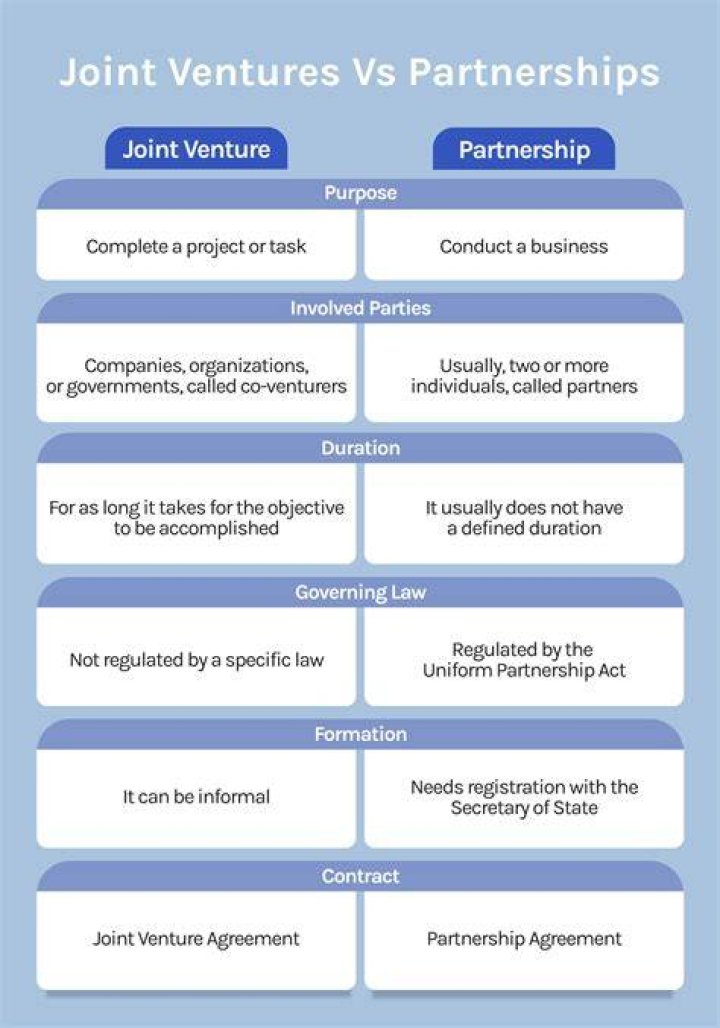
A joint venture is when two or more parties agree to pool their assets or resources together to create a new business entity. The businesses then share expenses and revenues along the way. By contrast, a syndicate focuses on completing a single transaction or project rather than a long-term collaborative partnership.
What are syndicate deals?
A syndicate is a temporary alliance formed by professionals to handle a large transaction that would be impossible to execute individually. By forming a syndicate, members can pool their resources together, and share in both the risks and the potential for attractive returns.
What is an example of a joint venture?
Another famous example is Hulu, which began life as a joint venture between NBC Universal, Providence Equity Partners, News Corporation and then The Walt Disney Company. Launched in 2007, Hulu was originally conceived to run programming from these four companies and their respective subsidiaries.
Why is a joint venture good?
A joint venture affords each party access to the resources of the other participant(s) without having to spend excessive amounts of capital. Each company is able to maintain its own identity and can easily return to normal business operations once the joint venture is complete.
Who forms a syndicate?
Two or more companies may form a syndicate to handle a specific project. They share their resources and expertise and also share the potential risk associated with the project. Usually, companies working in the same sector form a syndicate to operate jointly for a venture that is risky as well as profitable.
What is another word for syndicate?
In this page you can discover 36 synonyms, antonyms, idiomatic expressions, and related words for syndicate, like: partnership, alliance, group, council, union, affiliate, associate, association, coalition, business and consortium.
What is the purpose of a joint venture?
A joint venture (JV) is a business arrangement in which two or more parties agree to pool their resources for the purpose of accomplishing a specific task. This task can be a new project or any other business activity.
What’s the difference between a joint venture and syndication?
However, before moving forward, you need to know what type of partnership you are allowed to legally form. That is, you need to know the difference between the two most common partnership structures: joint venture (JV) and syndication.
Which is an example of a joint venture?
A JV is when two or more individuals or companies pool resources to accomplish a common goal and where all parties involved are managers in the deal. An example would be a general partnership on a syndication.
What’s the difference between syndication and a partnership?
Overall, a syndication is a partnership where the investors do not have active roles in the ongoing management of the real estate project. Here is aguide a created that goes over what an apartment syndication is in more detail. It is vital that you consult with a securities attorney before forming a partnership to purchase real estate.
What’s the difference between a JV and general partnership?
They must have a defined role and you must be able to prove that they actually fulfilled those duties. A JV is when two or more individuals or companies pool resources to accomplish a common goal and where all parties involved are managers in the deal. An example would be a general partnership on a syndication.