Abraham Maslow was an American psychologist who developed a hierarchy of needs to explain human motivation. His theory suggested that people have a number of basic needs that must be met before people move up the hierarchy to pursue more social, emotional, and self-actualizing needs.
Is Maslow a management theory?
Maslow believed that people perform at the highest level of productivity and quality when they have met the highest level need of self actualization. The management theory of Abraham Maslow basics require knowledge of a few core areas, including Maslow’s biography and influences, his key ideas and his scholarly work.
How can managers use Maslow’s theory?
As a manager, you can account for the physiological needs of your employees by providing comfortable working conditions, reasonable work hours and the necessary breaks to use the bathroom and eat and/or drink. Safety needs include those needs that provide a person with a sense of security and well-being.
What theory is Abraham Maslow most known for?
self-actualization theory of psychology
Abraham Maslow, in full Abraham Harold Maslow, also called Abraham H. Maslow, (born April 1, 1908, New York, New York, U.S.—died June 8, 1970, Menlo Park, California), American psychologist and philosopher best known for his self-actualization theory of psychology, which argued that the primary goal of psychotherapy …
What is the contribution of Max Weber in management?
3. Bureaucracy / Contribution of Max Weber Max weber’s main contribution to management is his theory of authority structure and his description of organizations based on the nature of authority relations within them.
How is Maslow’s theory used today in schools?
Maslow’s Hierarchy of Needs is a popular motivation theory that is widely referred to in educational circles. However, Maslow’s Hierarchy of Needs can provide teachers a reminder and framework that our students are less likely to perform at their full potential if their basic needs are unmet.
Why is Maslow’s theory important?
Hierarchy of Needs and Organizational Theory. Maslow’s hierarchy of needs is relevant to organizational theory because both are concerned with human motivation. Understanding what people need—and how people’s needs differ—is an important part of effective management.
What are the 5 levels of needs according to Maslow?
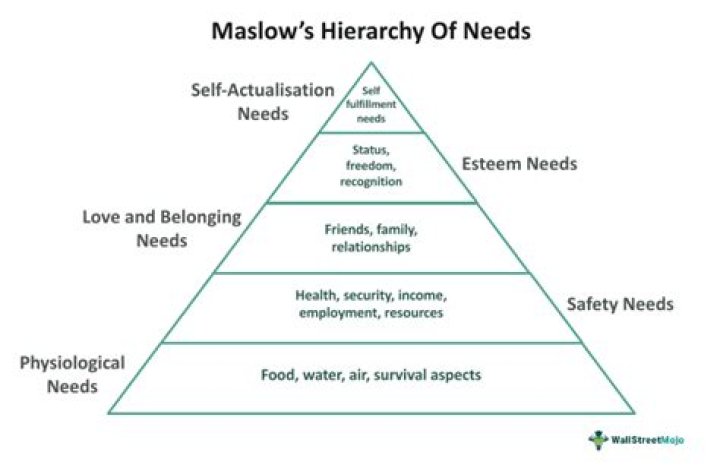
Maslow’s hierarchy of needs is a theory of motivation which states that five categories of human needs dictate an individual’s behavior. Those needs are physiological needs, safety needs, love and belonging needs, esteem needs, and self-actualization needs.
What is the management theory of Max Weber?
Max Weber, a German scientist, defines bureaucracy as a highly structured, formalized, and also an impersonal organization. He also instituted the belief that an organization must have a defined hierarchical structure and clear rules, regulations, and lines of authority which govern it.
When did Abraham Maslow develop his motivation theory?
Here is one of our Manage in a Minute pages, with a short introduction to the basics of this well known theory. Psychologist Abraham Maslow first developed his famous theory of individual development and motivation in the 1940’s. He suggested that human beings have a hierarchy of needs.
What did Abraham Maslow say about the hierarchy of needs?
Psychologist Abraham Maslow first developed his famous theory of individual development and motivation in the 1940’s. He suggested that human beings have a hierarchy of needs. That is, that all humans act in a way which will address basic needs, before moving on to satisfy other, so-called higher level needs.
Who is the author of Maslow on management?
The following is a highlighted summary of the book, Maslow on Management, published by John Wiley & Sons Inc.. The statements below are key points of the book as determined by James Altfeld and have been made available at no charge to the user. Maslow On Management By Abraham H. Maslow Foreword by Warren Bennis
What did John Maslow do for a living?
Whereas most social scientists of his day seemed to wear blinders that riveted their attention to narrow concerns, Maslow’s own vision was far-reaching. His lifetime of discoveries in motivation and personality transcended academic psychology, and extended into the major business fields of management and marketing.