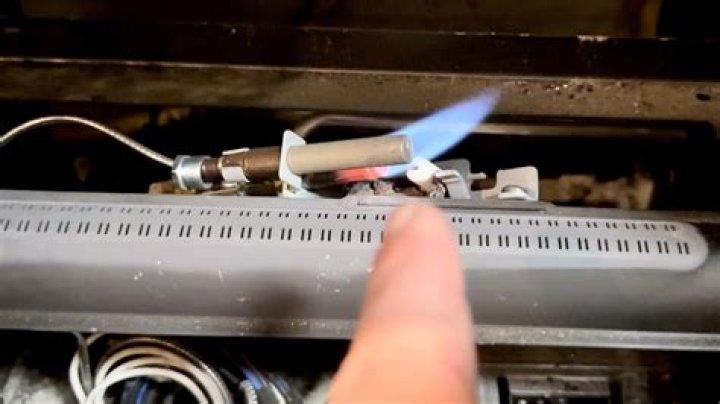
If you can’t get the flame to light at all, and you’re sure the gas is on, there’s probably an obstruction in the pilot tube. If the flame lights and goes out when you release the gas control knob after holding it in for the recommended 20 to 30 seconds, that’s the sign of a thermocouple malfunction.
Do natural gas valves go bad?
A bad gas valve in a Honeywell appliance such as a water heater or furnace that is powered by natural gas can go bad and affect the performance of the unit. A stuck valve could release gas into the air without regulation or the valve could cause the unit not to fire up at all.
How do you test a Honeywell gas valve?
How do you test a Honeywell gas valve with a multimeter?
- Turn off the furnace at the wall control.
- Take out the bolts in the service panel on the side of the furnace using a nut driver.
- Pull the wires off the gas valve terminals.
- Turn the test control on the multimeter to “mV,” which stands for millivolt.
Does a Honeywell gas valve have a battery?
The water heater comes with a sophisticated, advanced Honeywell Water Heater thermostat/valve that provides continuous monitoring of the water temperature and turning on and off the gas accordingly – all without battery. It uses a “thermopile” technology that converts thermal energy into electrical energy.
What can go wrong with a gas fireplace?
Top 10 Problems With Gas Fireplaces
- #1 Lack of maintenance, cleaning, and inspections.
- #2 Fear of gas.
- #3 The smell of burning gas.
- #4 Burner failure from pet hair and dander.
- #5 Dead batteries.
- #6 Raw gas/gas leak.
- #7 Cloudy/white glass.
- #8 The gas has not been turned on.
How do you know if your fireplace is out of gas?
Like most gas powered appliances, the pilot light in your gas fireplace is responsible for igniting the flame. If the pilot light blows out, your fireplace won’t light. To check, open the vent and see if the small flame is burning.
Is a faulty gas valve dangerous?
Any boiler fault is potentially dangerous, especially any problem that relates to gas. But, when your boiler locks out due to a gas valve fault, the idea is to make your boiler safe; continued operation could mean gas is being leaked into the burner. And for this reason, you shouldn’t attempt to reset your boiler.
How often should gas valves be replaced?
Repair every three to five years.
What causes a gas valve to go bad?
The valve itself may have simply worn out or may be damaged due to basement seepage or submersion. Alternately, one of the electronic gas ignition components or a glitch in the safety circuit may be to blame. If your furnace has a standing pilot light, the thermocouple could be worn out.
Can a gas valve be repaired?
The gas valve cannot be repaired in the field. Only the gas valve manufacturer or someone certified by the manufacturer of the gas valve can make repairs. Then re-certifying the safety of the gas valve.
What kind of gas valve is Honeywell Tempstar?
This is a brand new Honeywell replacement for ICP Heil Quaker Tempstar gas valve, part# 1170908. The Honeywell part number is # VR8200A2132 (also# VR8200A2009 ). It is designed to replace most gas valves used in standing pilot furnaces. The valve is setup for natural gas, but comes with an LP gas conversion kit.
What is the Honeywell standing pilot gas valve number?
The Honeywell part number is # VR8200A2132 (also# VR8200A2009 ). It is designed to replace most gas valves used in standing pilot furnaces. The valve is setup for natural gas, but comes with an LP gas conversion kit.
What happens if a Honeywell gas valve goes bad?
A bad gas valve in a Honeywell appliance such as a water heater or furnace that is powered by natural gas can go bad and affect the performance of the unit. Because gas is involved, problems with gas valves are a major safety concern.
What did Binger do when he became chairman of Honeywell?
On becoming chairman of Honeywell, Binger revamped the company sales approach, placing emphasis on profits rather than on volume. He also stepped up the company’s international expansion – it had six plants producing 12% of the company’s revenue.