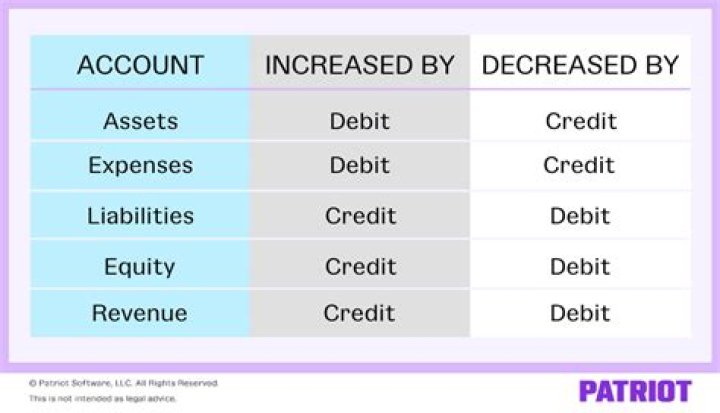
A debit increases asset or expense accounts, and decreases liability, revenue or equity accounts. It increases liability, revenue or equity accounts and decreases asset or expense accounts.
Why does debit increase assets?
Assets and expenses have natural debit balances. This means positive values for assets and expenses are debited and negative balances are credited. In effect, a debit increases an expense account in the income statement, and a credit decreases it. Liabilities, revenues, and equity accounts have natural credit balances.
What is debit used to record?
A debit is typically used to record an increase in an asset, a decrease in a liability, an increase in expenses, or a decrease in equity.
What accounts are debited to record increases?
Debits are used to record increases in asset & expense accounts and decreases in liability, owner’s equity, & revenue accounts. Asset, expense accounts & the owner’s drawing account normally have Debit balances since that is the way they are increased.
What is records an increase in a liability?
Increase , in liability means the firm has received the benefit for which payment is yet to be made , thus , liability is credited . …
How are debits used to record increases in?
D. debits Cash and credits a revenue account. The account used to record increases in owner’s equity from the sale of goods or services is the __________ account. Which of the following types of accounts normally have debit balances?
How are assets and revenue recorded in accounting?
Increases in assets and revenue are both recorded with debits. When an owner invests assets in a business, the capital account is debited. Debit entries increase asset, drawing, expense and liability accounts. The normal balance side of a liability account is the debit side.
When is the capital account is debited true or false?
TRUE or FALSE When an owner invests assets in a business, the capital account is debited. FALSE TRUE or FALSE If the total of the amounts on the debit side of an account is greater than the total on the credit side, the balance is recorded on the debit side
When do you need a debit for a transaction?
Therefore, each transaction will require a debit to another account. (Recall that double-entry bookkeeping requires at least one debit and one credit when recording a transaction.) In the first transaction, the debit will be to a long term asset account such as Delivery Vehicles.